
World Cup 2026 Betting Hub — Your Irish Punter's HQ
 Available in US
Odds, group analysis, predictions and tips. Every kick-off time in IST. No emotional baggage — just a neutral's honest read on the tournament.

What This Hub Covers at a Glance
- The 2026 World Cup runs from 11 June to 19 July across 16 stadiums in the USA, Mexico and Canada — 48 teams, 104 matches and the first edition with a Round of 32 featuring best third-place qualifiers.
- Ireland missed out on penalties against Czechia in Prague, so this hub takes the neutral punter's angle — betting without the heartbreak of backing your own.
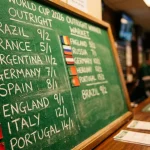
- Outright favourites sit where you'd expect — Brazil, Argentina, France, England and Spain all priced inside 8/1 — but the expanded format creates genuine value further down the market.
- Every kick-off time on this site is converted to IST (UTC+1), because nobody wants to do maths at 2am.
Bet Builder X-Ray
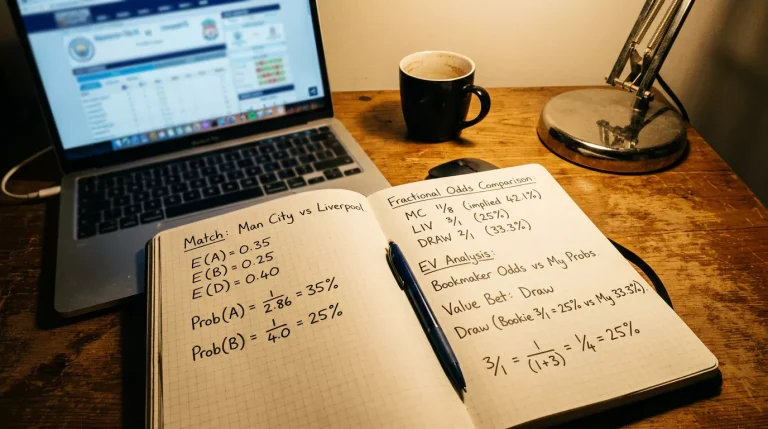
Legs from the same match don't behave like separate bets. Price a builder off the match itself, then see what the bookmaker is really charging you for the correlation.
1 · Set the match
Fractional (11/4) or decimal (3.75)—
2 · Pick your legs
0 of 6 selectedA first-choice striker sits around 25–35%. A midfielder who takes the penalties, 15–20%.
3 · The price board
No legs selectedSet the match, tick two or more legs, and the board fills in.
Add the builder price to see the margin baked into it.
How the model gets there
Your three match prices are stripped of the bookmaker's margin, then a goal model is fitted to them: two attacking rates, one per side, with a low-score adjustment that lifts 0–0 and 1–1 the way real football does. That gives a full grid of scorelines and their probabilities.
Every leg is then read straight off that grid. The naive figure multiplies each leg's own chance together, as a standard accumulator does. The fair figure counts only the scorelines where all your legs land at once — which is the honest number, because these events share a match.
Player legs use his share of his side's goals: if his team scores twice, the chance he got at least one of them follows from that share. Corner, card and shot legs are deliberately left out — they can't be derived from a scoreline grid, and guessing them would make the output look more precise than it is.
Estimates for reading a price, not a prediction. Odds and settlement rules vary by bookmaker. 18+. Gamble responsibly.
The World Cup 2026 at a Glance
I've covered tournament betting markets for the best part of a decade, and I've never seen a World Cup this difficult to price. World Cup 2026 betting presents a unique challenge: the 2026 edition rewrites the rulebook with 48 teams instead of 32, 12 groups instead of 8, and a knockout bracket so deep it starts at the Round of 32 rather than the Round of 16. For bookmakers and punters alike, the old models don't quite fit anymore.
The tournament kicks off on 11 June 2026 at the Estadio Azteca in Mexico City — Mexico against South Africa — and finishes 39 days later with the final at MetLife Stadium in East Rutherford, New Jersey on 19 July. In between, 104 matches will be played across 16 stadiums in three countries: the United States hosts 11 venues, Mexico contributes three (Mexico City, Monterrey, Guadalajara) and Canada provides two (Toronto and Vancouver). It is comfortably the most sprawling World Cup ever staged, and the time zones alone will test the patience of anyone watching from this side of the Atlantic.
Format at a glance: 48 teams drawn into 12 groups of four. The top two from each group advance automatically. The eight best third-placed teams also qualify, feeding into a Round of 32. From there, single-elimination knockout rounds run through to the final.

That third-place rule is the single biggest change for betting purposes. In previous World Cups, finishing third in your group meant an early flight home. Now it might mean a second chance — and that alters how teams approach dead rubbers, how managers rotate squads and how punters should think about group-stage accumulators. A side sitting on four points in third place could still be very much alive, which makes "to qualify from group" markets far less predictable than they used to be.
The competitive picture is shaped by familiar names at the top — Brazil chasing a sixth title, Argentina defending their 2022 crown, France looking for back-to-back triumphs after their 2018 success — but the expanded field introduces genuine wildcards. Four teams are appearing at a World Cup for the first time: Cabo Verde, Curaçao, Jordan and Uzbekistan. Their presence adds colour but also complicates group betting, because pricing a debutant with no World Cup track record is guesswork dressed up as analysis. Some will fold under the pressure of the occasion; others will arrive with nothing to lose and play accordingly.
For a complete breakdown of markets, odds formats and strategies, I've put together a dedicated guide. This hub is your starting point — an overview of the tournament, the groups, the odds landscape and the angles that matter most to punters watching from Ireland. I'll be updating the odds sections as the tournament approaches, and every kick-off time you see here is already converted to Irish Standard Time.
The 2026 World Cup is the first with 48 teams and a Round of 32. Third-place group finishers can still qualify, which fundamentally changes how group-stage betting works. Old assumptions about dead rubbers and rotation no longer apply.
All 12 Groups — Who's Where
Twelve groups, forty-eight teams, and for the first time at a World Cup, being third in your group might still get you through. The draw landed in December 2025, and it delivered a mix of predictable heavyweight matchups and a few eyebrow-raisers that should keep neutral fans entertained well into the small hours of Irish mornings.
Below is the full group breakdown. If you want detailed analysis, odds and qualification predictions for each group, the individual group pages go much deeper — this is the bird's-eye view of where World Cup 2026 betting interest will be concentrated.
| Group | Teams |
|---|---|
| A | Mexico, South Korea, South Africa, Czechia |
| B | Canada, Bosnia and Herzegovina, Qatar, Switzerland |
| C | Brazil, Morocco, Haiti, Scotland |
| D | USA, Paraguay, Australia, Turkey |
| E | Germany, Curaçao, Côte d'Ivoire, Ecuador |
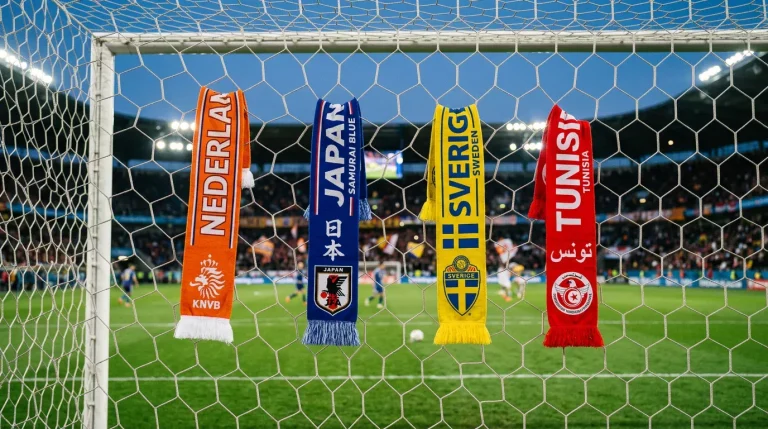
| F | Netherlands, Japan, Sweden, Tunisia |
| G | Belgium, Egypt, Iran*, New Zealand |
| H | Spain, Cabo Verde, Saudi Arabia, Uruguay |
| I | France, Senegal, Norway, Iraq |
| J | Argentina, Algeria, Austria, Jordan |
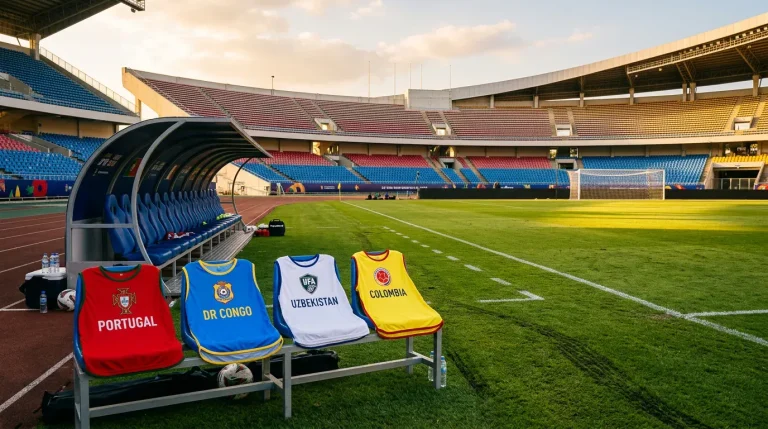
| K | Portugal, DR Congo, Uzbekistan, Colombia |
| L | England, Croatia, Ghana, Panama |
*Iran's participation remains uncertain due to the ongoing military conflict involving the US and Israel. Iran's sports minister has stated participation may not be possible. FIFA president Gianni Infantino insists Iran should compete. A final decision is expected at the FIFA Congress on 30 April 2026.

From an Irish perspective, two groups demand attention above all others. Group C puts Scotland — our Celtic cousins, back at a World Cup for the first time since 1998 — in a bracket with Brazil, Morocco and Haiti. The Tartan Army against the five-time champions is the kind of fixture that will have every pub in Dublin picking a side, and it won't be the yellow shirts. Group L features England alongside Croatia, Ghana and Panama, which means another chapter in the complicated relationship Irish fans have with their neighbours' footballing fortunes.
The conversation around which group qualifies as the "Group of Death" is already running hot. Group F — Netherlands, Japan, Sweden, Tunisia — has four sides who could all realistically finish second, and any of the top three could beat the others on a given day. Group K, with Portugal, Colombia, DR Congo and debutants Uzbekistan, is another where the margins feel razor-thin behind Portugal. Then there's Group I, where France will stroll through but the battle between Senegal, Norway and Iraq for the remaining spots could produce some of the tournament's best matches.
Four groups include at least one debutant: Curaçao in Group E, Cabo Verde in Group H, Jordan in Group J, and Uzbekistan in Group K. These sides are difficult to price because there's no World Cup data to work from — their qualifying form and regional tournament records are the only reference points. For punters, that uncertainty cuts both ways. Debutants can be cannon fodder or they can be the Romania of 1994, turning up and surprising everyone. The "to qualify from group" markets for groups containing a debutant tend to offer slightly better value on the established sides, because bookmakers widen the spread to account for the unknown.
The host nations are spread across three groups. Mexico open the tournament in Group A, the USA anchor Group D, and Canada sit in Group B. All three have realistic paths to the knockout rounds — home advantage at a World Cup is a well-documented phenomenon, and the noise levels in American stadiums built for NFL crowds will be unlike anything most visiting teams have experienced.
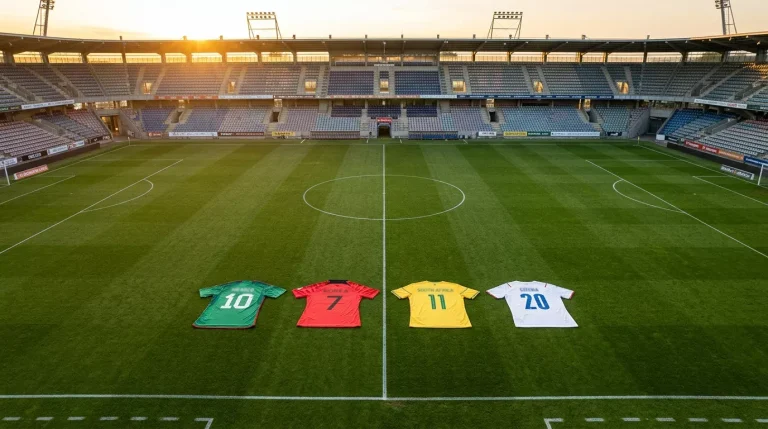




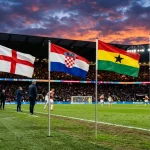
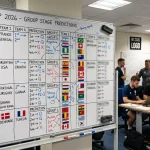
This is the third World Cup held in Mexico (1970, 1986, 2026) — but the first where the Estadio Azteca hosts the opening match rather than the final. MetLife Stadium in New Jersey takes the honour for the showpiece this time.
The groups set the stage, but the money follows the odds. Here's where the outright winner market stands heading into the final stretch before kick-off.
Latest Outright Winner Odds
Walk into any bookmaker's shop on Grafton Street or open any betting app on your phone, and the World Cup 2026 betting market tells you the same story it always does — the usual suspects at the top, a cluster of dark horses in the middle, and a long tail of sides priced at triple-figure odds who are there to make up the numbers. The difference in 2026 is scale. With 48 teams instead of 32, the outright market is wider than it's ever been, and that width creates pockets of value if you know where to look.
As of early April 2026, the market shapes up roughly as follows. These are indicative fractional odds available across major licensed bookmakers operating in Ireland — exact prices vary by operator and will shift as squad announcements and warm-up results come in.
| Team | Fractional Odds | Decimal |
|---|---|---|
| Brazil | 9/2 | 5.50 |
| Argentina | 5/1 | 6.00 |
| France | 11/2 | 6.50 |
| England | 13/2 | 7.50 |
| Spain | 7/1 | 8.00 |
| Germany | 10/1 | 11.00 |
| Netherlands | 14/1 | 15.00 |
| Portugal | 14/1 | 15.00 |
| Belgium | 20/1 | 21.00 |
| USA | 25/1 | 26.00 |
| Colombia | 33/1 | 34.00 |
| Morocco | 40/1 | 41.00 |
| Uruguay | 40/1 | 41.00 |
| Scotland | 150/1 | 151.00 |
Brazil sit at the head of the market at 9/2, which reflects both their pedigree — five titles, more than any other nation — and a general sense that this squad is stronger than the one that exited in the quarter-finals in Qatar. Argentina at 5/1 carry the reigning champions' premium, though the question of how Lionel Messi's ageing legs hold up through a 39-day North American summer is already baked into the price. France at 11/2 and England at 13/2 complete the top tier, with Spain's Euro 2024 title keeping them inside 7/1.
The value conversation starts further down the list. Germany at 10/1 feel generous given their tournament pedigree, though their recent form has been inconsistent enough to justify some caution. The USA at 25/1 carry home advantage across 11 stadiums, which historically provides a significant lift — South Korea reached the semi-finals as co-hosts in 2002. Colombia at 33/1 are an intriguing proposition in a Group K where they could finish second behind Portugal and enter the knockout rounds with momentum. Morocco at 40/1 are the side I keep coming back to; their 2022 semi-final run was built on a defence that conceded just one goal from open play in the entire tournament, and that defensive core remains largely intact.
Keep in mind that outright prices will tighten as the tournament approaches. Squad announcements in late May typically trigger the first meaningful odds movement, and warm-up friendlies in early June can shift prices by several points for teams that either impress or alarm. If you're considering an outright bet, getting on early — before the market contracts — usually offers better value than waiting for certainty that never quite arrives.
For a deeper dive into where the smart money might go, the full outright winner odds breakdown covers each contender in detail, including value picks and how these prices are likely to move before June.
The outright market is wider than at any previous World Cup, with 48 teams creating more live contenders. The top five — Brazil, Argentina, France, England, Spain — are tightly bunched between 9/2 and 7/1. For value, look at sides priced between 20/1 and 50/1 with genuine knockout-stage pedigree.
Ireland's Near Miss — And Where We Go From Here
I was watching the Czech Republic match in a pub off Camden Street, and the place went from deafening to silent in the time it takes a penalty to hit the post. That was 26 March 2026, in Prague, and it was the moment Ireland's World Cup dream died for the sixth consecutive cycle. We haven't been at a World Cup since 2002. An entire generation of Irish football fans has never seen the Boys in Green on the biggest stage.
The thing is, this time felt different. This wasn't a whimper — it was a scream that fell just short. The qualification campaign had genuine moments of magic. Troy Parrott's hat-trick away to Hungary turned a group that looked like it would be dominated by Portugal into an actual contest. Then came the night in Dublin when Ireland beat Portugal 2-1 at the Aviva, a result that sent the entire country into a frenzy and secured second place in Group F behind the Portuguese. We made the playoffs. We were two matches away.
The playoff semi-final against Czechia in Prague ended 2-2 after extra time, with Parrott converting from the spot to keep Ireland alive during the shootout. But the fourth Irish penalty was saved, and Czechia won 4-3. A couple of centimetres on a goalkeeper's glove, and this entire hub might have had a very different tone.

So here we are: neutral fans at another major tournament. There's a particular freedom in that, if you can get past the sting. When your team isn't involved, you can approach World Cup 2026 betting without emotional bias — and emotional bias is the single biggest leak in any punter's bankroll. I've watched people throw money at Ireland to beat France at 14/1 because their heart was running the show. As neutrals, we don't have that problem. Every match is a clean decision. Every bet is driven by analysis, not by whether you'll be crying into your pint if it loses.
This hub is built from that neutral's chair. I'll give honest assessments of every contender, including the ones we might instinctively root for (Scotland) and the ones we have a complicated relationship with (England). The full story of Ireland's qualification heartbreak deserves its own page, and it has one — complete with the heroics, the penalty agony and a proper look at what comes next for Irish football.
Ireland's last World Cup goal was scored by Robbie Keane against Saudi Arabia on 11 June 2002 — exactly 24 years to the day before the 2026 World Cup kicks off. The symmetry is poetic, even if the wait hasn't been.
Neutrality has its perks, but let's be honest — there are two teams in this tournament that Irish fans will be watching more closely than any others.
England and Scotland — The Ones We're Watching
Every Irish football fan operates on a sliding scale when it comes to England. Some of us genuinely want them to do well — the Premier League has stitched English football into Irish life so deeply that half the country feels a secondhand investment in Jude Bellingham's left foot. Others would rather watch England crash out in the group stage, ideally on penalties, ideally while we're recording it for posterity. Either way, nobody is changing the channel when England are playing.
In Group L, England face Croatia, Ghana and Panama. On paper, it's a comfortable draw — they should top the group without breaking a sweat. But England at tournaments have a long history of making comfortable draws feel like hostage situations. The Croatia rematch is the headline fixture, a callback to the 2018 World Cup semi-final that England lost 2-1 in extra time. Croatia are older now, further from their golden generation's peak, but they still have enough quality to cause problems. Ghana are athletic and unpredictable, and Panama are there to compete rather than to concede politely.
Then there's Scotland. Twenty-eight years without a World Cup, and the Tartan Army are finally back. The Celtic bond between Ireland and Scotland runs deep — shared history, shared culture, shared understanding of what it feels like to be a small football nation punching above your weight. When Scotland take the pitch against Brazil in Group C, there will be pubs across Ireland that feel like Edinburgh on a match day.

Group C is brutal for Scotland: Brazil, Morocco and Haiti. Getting out of that group would be a genuine achievement, and the odds reflect it — Scotland are priced around 150/1 for the outright tournament, which tells you how the market rates their chances of a deep run. But qualifying from the group as one of the best third-placed teams is not impossible. If Scotland can take points off Haiti and nick a draw against Morocco, four points might be enough to squeeze through. The maths of the expanded format works in favour of sides who can grind out results without needing to beat the group favourite.
England in Group L and Scotland in Group C are the two sides Irish fans will follow most closely. England are among the tournament favourites at 13/2. Scotland, back at the World Cup for the first time since 1998, face a tough group but the expanded format gives them a realistic path to the knockout rounds.
England and Scotland are just two of 48 sides in this tournament. For a look at every contender — from the favourites to the dark horses to the four debutants — the full teams overview covers the lot.
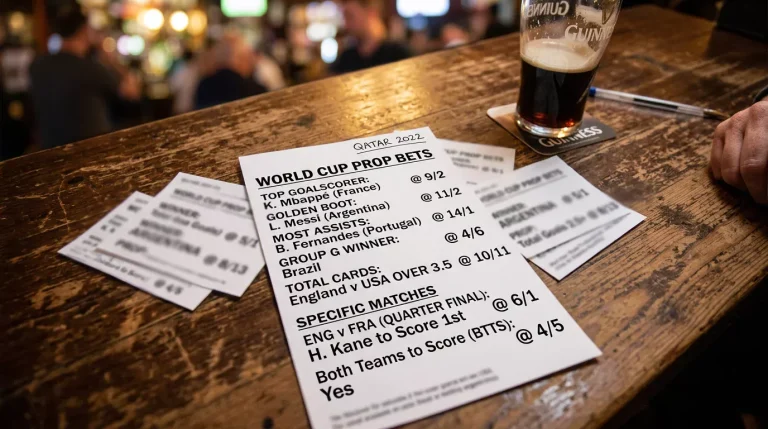



Key Dates and Kick-Off Times in Irish Time
Here's the uncomfortable truth about watching this World Cup from Ireland: the time difference is going to hurt. The majority of venues are in US Eastern Time, which is five hours behind Irish Standard Time during the summer. That means a 9pm ET kick-off — a prime-time slot for American broadcasters — translates to 2am IST. A 6pm ET start becomes 11pm in Dublin. Even the earliest US kick-offs, scheduled for 12pm or 1pm ET, land between 5pm and 6pm IST, which at least falls within normal waking hours.
Matches in Mexico are slightly kinder. Mexico City sits in Central Time (CT), six hours behind IST, so a 6pm CT kick-off hits midnight in Ireland. Vancouver operates on Pacific Time — eight hours behind — meaning late-evening games on the west coast of Canada won't finish until the early hours of the morning here. The bottom line: if you're planning to follow this tournament closely, invest in coffee.
| Date (2026) | Event | IST Kick-Off | Venue |
|---|---|---|---|
| 11 June | Opening Match: Mexico vs South Africa | TBC | Estadio Azteca, Mexico City |
| 11–27 June | Group Stage (all 48 matches per round) | Various | All 16 stadiums |
| 28–30 June | Rest days before knockout rounds | — | — |
| 1–4 July | Round of 32 | Various | TBC |
| 5–8 July | Round of 16 | Various | TBC |
| 9–12 July | Quarter-Finals | Various | TBC |
| 15–16 July | Semi-Finals | TBC | TBC |
| 19 July | Final | TBC | MetLife Stadium, NJ |
FIFA has not released the full detailed schedule with exact kick-off times for every group match as of early April 2026 — that typically lands six to eight weeks before the opening fixture. The dates above reflect the confirmed tournament structure. Once the full schedule drops, I'll have every kick-off time converted to IST across the site.

For punters, the time difference has a practical implication beyond sleep deprivation. World Cup 2026 betting on in-play markets for matches kicking off at 2am IST means you're making decisions while tired, potentially after a few pints, with thinner in-play markets because European volume is lower at that hour. That's not necessarily a disadvantage — thinner markets can mean slower odds adjustments and opportunities for those who are alert enough to spot them — but it does require discipline. Setting pre-match positions before midnight and treating the late-night in-play action as optional rather than mandatory is a strategy I'd recommend.
The 2002 World Cup in Japan and South Korea — the last one Ireland appeared in — had early-morning kick-offs for Irish viewers, with some matches starting at 7:30am. At least this time you can have a pint while watching.
Best Bookmakers for Irish Punters
Paddy Power shops are as much a fixture of the Irish high street as the post office and the chipper. But for a World Cup with 104 matches stretched across 39 days, you'll want to think beyond the local bookie. The range of markets, the depth of in-play coverage and the quality of the odds can vary significantly between operators, and having accounts with more than one licensed bookmaker is standard practice for anyone serious about finding value.
Ireland's betting landscape is regulated under the Gambling Regulation Act 2024, with the Gambling Regulatory Authority of Ireland (GRAI) now operational and accepting licence applications as of February 2026. Any bookmaker legally offering services to Irish customers must hold an appropriate licence. The key consumer protections under the new framework include a ban on using credit cards to fund betting accounts, the removal of VIP loyalty programmes that offered free bets or enhanced odds as incentives, and restrictions on gambling advertising before 9pm on broadcast media.
When choosing where to place your World Cup 2026 betting stakes, there are a few practical factors worth weighing. Market depth matters — a bookmaker that offers 15 markets on a group match gives you more angles than one offering five. For the World Cup, look for operators that cover outright, group, match, player and specials markets comprehensively. In-play coverage is another separator; some platforms update live odds faster and offer a wider range of in-play options, which becomes crucial during a tournament where you might want to react to a red card or a tactical shift at half-time. Odds competitiveness is the most obvious factor — even small differences in price add up over 104 matches.
Ireland has several well-known operators with deep roots in the market, including Paddy Power, BoyleSports, bet365, Betfair and William Hill. Each has strengths: some excel at in-play speed, others at market range, others at competitive outright pricing. I'm not going to rank them here or tell you which one is "best" — that depends on what you prioritise and how you bet. The full bookmakers review breaks down the criteria in detail, with honest assessments of what each operator does well and where they fall short, specifically for World Cup betting.
One practical tip: open your accounts and verify your identity before the tournament starts. The KYC (Know Your Customer) verification process can take 24 to 48 hours with some operators, and the last thing you want is to spot a value price on the opening match and be locked out of your account while your passport photo is being reviewed. Get the admin done in May, and you're ready to go from matchday one.
Regulatory note: Under Ireland's Gambling Regulation Act 2024, advertisements for betting are prohibited on television, radio and video-on-demand platforms between 5:30am and 9:00pm. Promotional offers involving free bets have been restricted. These changes aim to protect consumers while maintaining a regulated market.
Frequently Asked Questions
How many teams are in the 2026 World Cup?
The 2026 FIFA World Cup features 48 teams — an expansion from the 32-team format used since 1998. Teams are drawn into 12 groups of four, with the top two from each group and the eight best third-placed teams advancing to a Round of 32.
Where is the 2026 World Cup being held?
The tournament is co-hosted by three countries: the United States (11 stadiums), Mexico (3 stadiums) and Canada (2 stadiums). The opening match takes place at Estadio Azteca in Mexico City on 11 June 2026, and the final is at MetLife Stadium in East Rutherford, New Jersey on 19 July 2026.
What time will World Cup matches kick off in Ireland?
Most matches in US Eastern Time venues will kick off between 5pm and 2am Irish Standard Time (IST, which is UTC+1 during summer). Exact kick-off times for individual fixtures have not yet been confirmed by FIFA as of April 2026, but expect many evening and late-night starts for Irish viewers.
Can I legally bet on the World Cup 2026 in Ireland?
Yes. World Cup 2026 betting is legal and regulated in Ireland under the Gambling Regulation Act 2024. The Gambling Regulatory Authority of Ireland (GRAI) oversees licensing. You must use a licensed bookmaker, and credit cards cannot be used to fund betting accounts under the current regulations.
What are fractional odds and how do they work?
Fractional odds are the standard format in Ireland and the UK. A price of 5/1 means you win five units for every one unit staked, plus your stake back. So a EUR 10 bet at 5/1 returns EUR 60 total (EUR 50 profit plus your EUR 10 stake). The decimal equivalent of 5/1 is 6.00 — multiply your stake by the decimal to calculate total return.
What does "best third place" mean in the group stage?
In the 2026 format, the top two teams from each group qualify automatically for the Round of 32, giving 24 automatic qualifiers. The remaining eight spots go to the best-performing third-placed teams across all 12 groups, ranked by points, goal difference and goals scored. This means finishing third in your group does not necessarily mean elimination.
Which teams are making their World Cup debut in 2026?
Four nations are appearing at a World Cup for the first time: Cabo Verde (Group H), Curaçao (Group E), Jordan (Group J) and Uzbekistan (Group K). Their lack of World Cup history makes them difficult to price in betting markets, which can create both risk and opportunity for punters.
